The starting point
Where this started.
Running a travel business gives me a close view of the work behind a booking. LHOS is my attempt to bring more of that work into one operating workspace.
A customer sees a trip. Behind it are leads, documents, payments and people trying to keep the details aligned. A collection of disconnected tools can make the hand-offs harder than they need to be.
The product
What matters in the experience.
Begin with the operational core
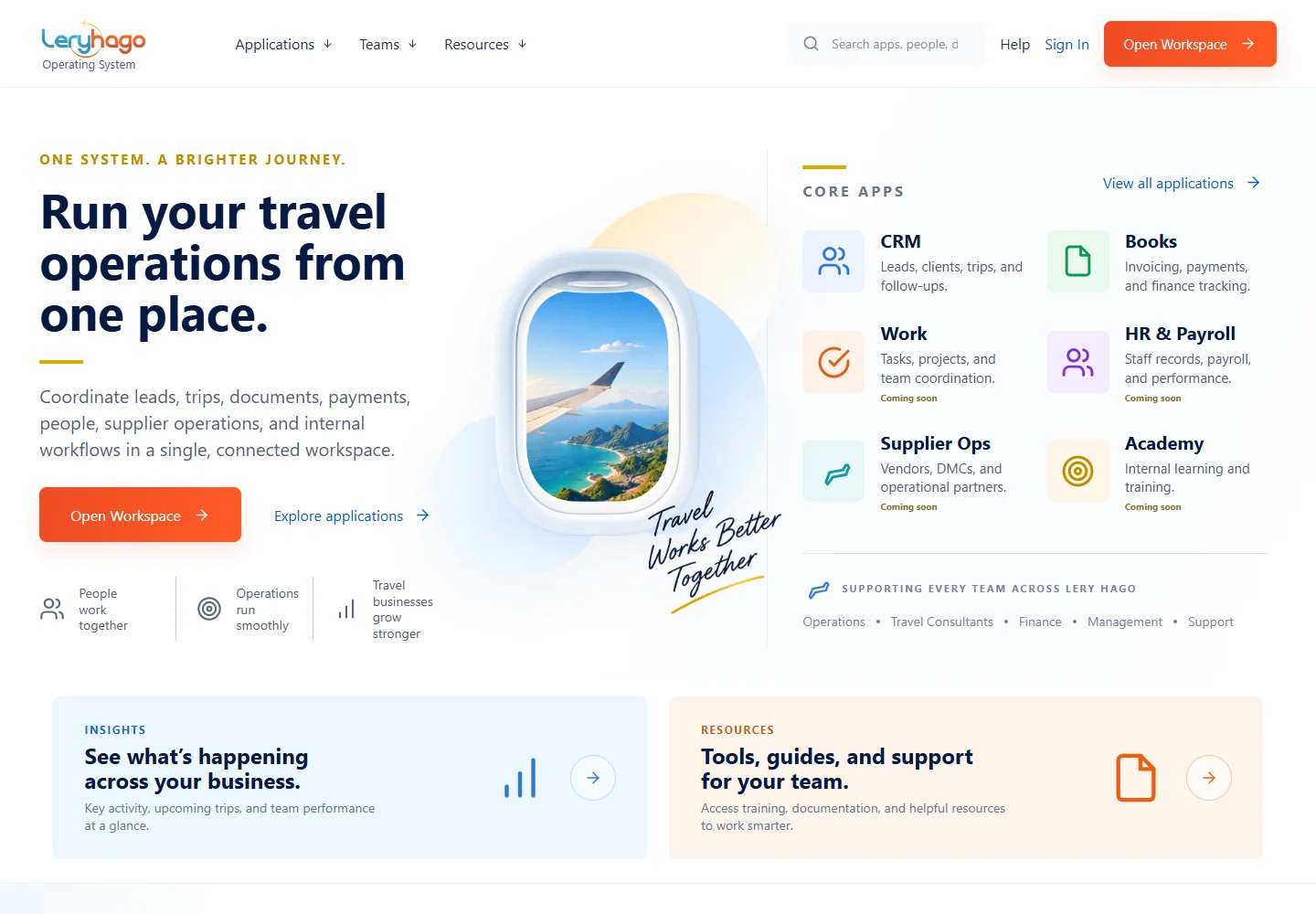
CRM and Books are presented as the core applications. That gives the product a concrete starting point: customer relationships and the financial records around the work.
Connect the journey behind the scenes
Leads, trips, documents and payments belong to a shared operational story. The aim is to keep the context available as work moves between people, rather than treating every task as a new beginning.
Make the roadmap visible
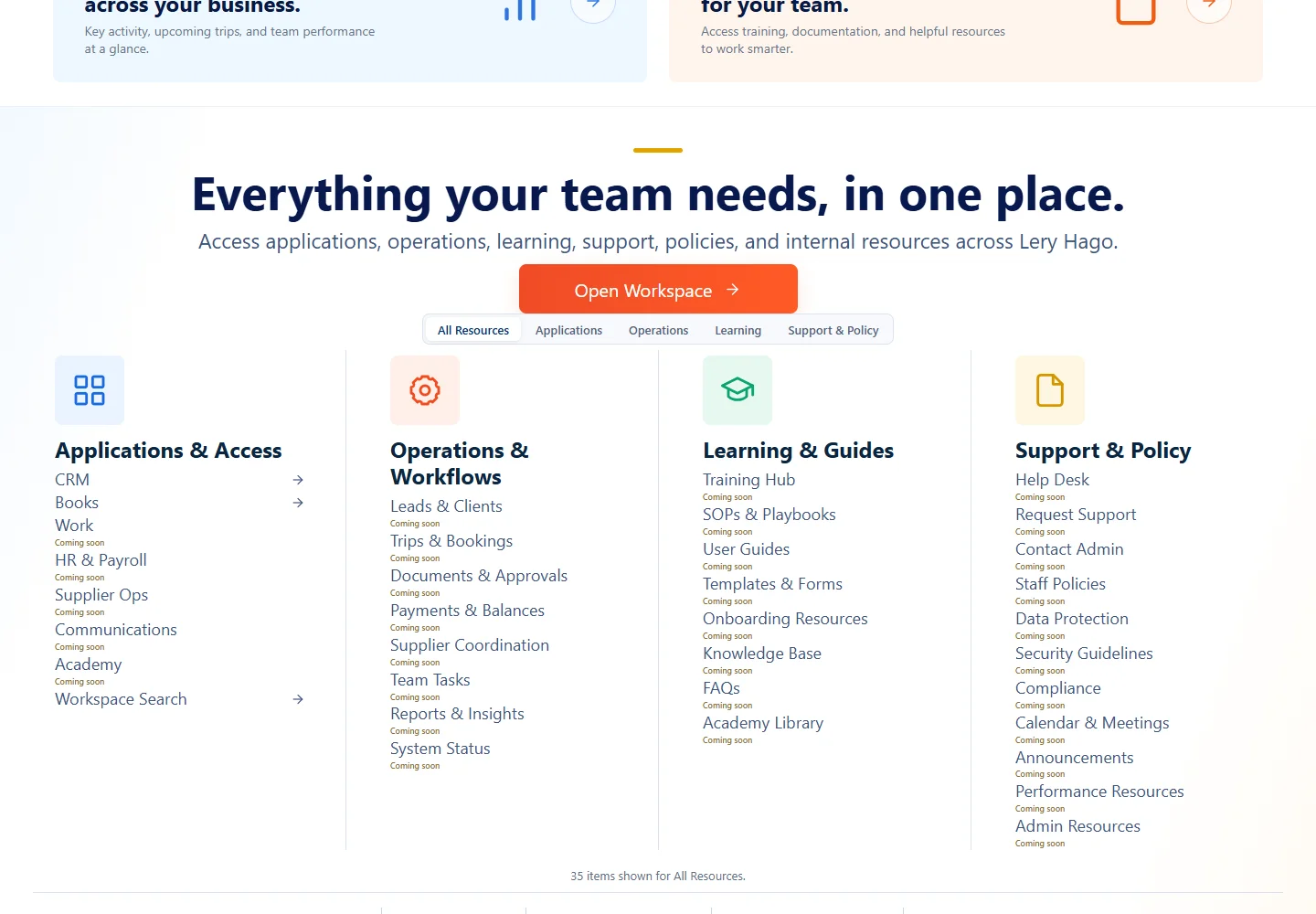
Work, HR, Supplier and Academy modules are labelled as coming soon on the public site. I keep that distinction here too; a module on the roadmap is not the same thing as a finished workflow.
An honest snapshot
Where it stands.
What’s there now
The public product introduction describes CRM and Books as the core, alongside travel leads, trips, documents, payments and team operations. The images here are public product views, not private client records.
What’s still open
Several modules are still coming soon. The public presentation is not a claim that every workflow has been tested end to end or that every proposed integration is live.
My part, and the people around it
I bring the travel-business context and direct the build using AI tools. That is different from claiming years of hands-on software engineering or taking credit for the tools and libraries underneath it.
I began hands-on AI-assisted software building in May 2026. I direct and iterate on these builds with AI tools, building on work by experienced developers and the people who created those tools.